
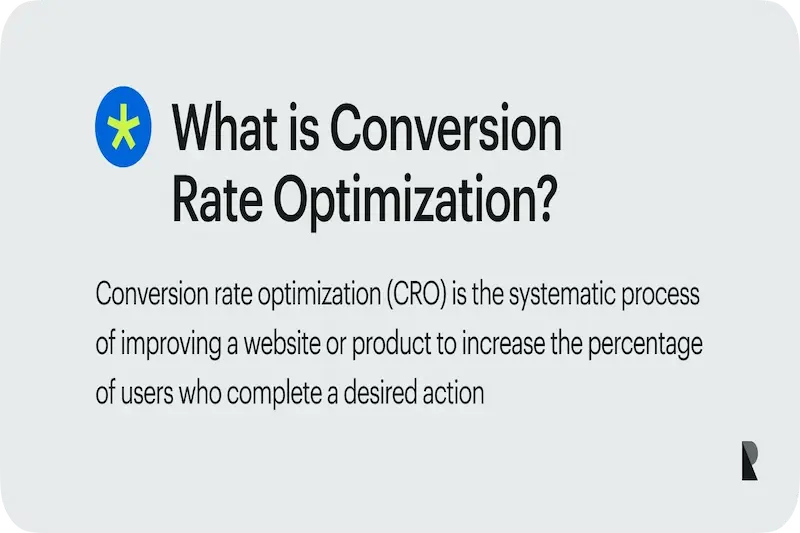
If you’re trying to grow your online business, then website conversion optimization is one of the most important things you can focus on right now. In simple terms, website conversion optimization means improving your website so that more visitors take meaningful actions—like buying your product, signing up, or contacting you instead of just leaving.
Now here’s the important part: you don’t always need more traffic. Most websites already have enough visitors. The real problem is that those visitors are not converting. This guide will help you fix that in a practical, easy-to-understand way.
Understanding Website Conversion Optimization in Simple Words
Let’s keep it simple.
Imagine your website is a physical store. People are walking in, looking around, and leaving without buying anything. That means your store has a conversion problem—not a traffic problem.
Website conversion optimization is about improving:
- How your website looks
- How it communicates
- How easy it is to use
- How quickly users find what they need
- How confidently they trust you
The goal is simple: turn visitors into customers or leads.
A “conversion” can mean different things depending on your business:
- E-commerce store → product purchase
- Service business → inquiry or booking
- Blog → email signup
- App → downloads
Once you understand this, everything else becomes easier.
Why Website Conversion Optimization is So Important
Let’s be honest—getting traffic costs time, effort, and money. Whether you’re running ads, doing SEO, or social media marketing, you’re working hard to bring people in.
But if your website is not optimized, here’s what happens:
- Visitors come in
- They get confused or bored
- They leave
- You lose potential sales
Now imagine improving your conversion rate from 1% to 3%.
That means:
- Same traffic
- 3x more results
- Higher profit without extra marketing cost
That’s why businesses invest heavily in website conversion optimization—it directly improves revenue.
Key Elements of Website Conversion Optimization (In Depth)
Now let’s go step by step and understand what actually improves conversions.
1. Understanding Your Visitor’s Intent
Before changing anything, ask yourself:
Why is someone visiting my website?
There are usually three types of visitors:
- People just exploring
- People comparing options
- People ready to buy
Your website must guide all three types smoothly.
If someone is just exploring, give them helpful content.
If someone is comparing, show benefits and proof.
If someone is ready, give them a clear “Buy Now” or “Contact Us” button.
When your website matches user intent, conversions naturally increase.
2. Creating a Clear Value Proposition
This is where many websites fail.
When someone lands on your homepage, they should understand in 5 seconds:
- What you offer
- Who it’s for
- Why it’s better
If they don’t understand this quickly, they leave.
A strong value proposition looks like:
- “Affordable skincare products for sensitive skin”
- “Fast, reliable web hosting for small businesses”
- “Learn digital marketing in simple steps”
Clear messaging = higher conversions.
You may also like it:
Shopify Growth Tips To Increase Sales and Store Traffic
Online Store Growth Tips To Boost Sales and Traffic Fast
Winning Product Research Guide For Ecommerce Beginners
Find Trending Products Online For Ecommerce Growth
3. Improving Website Structure and Navigation
If users can’t find what they want quickly, they won’t stay.
Good website structure means:
- Simple menu (not 10–15 options)
- Logical categories
- Easy access to important pages
- No confusion or clutter
Think of navigation like a roadmap. The easier it is, the more likely users are to convert.
4. High-Converting Landing Pages
Landing pages are one of the most powerful tools in website conversion optimization.
A good landing page should:
- Focus on one goal only
- Remove distractions like unnecessary links
- Highlight benefits clearly
- Include strong CTAs
- Build trust quickly
Example structure:
- Attention-grabbing headline
- Short explanation of offer
- Benefits list
- Social proof (reviews or testimonials)
- CTA button
If your landing page tries to do too much, it usually converts less.
5. Writing Powerful Headlines
Your headline is the first thing people read.
Weak headline:
- “Welcome to our website”
Strong headline:
- “Boost Your Online Sales with Proven Marketing Strategies”
Good headlines:
- Focus on benefit
- Are clear, not clever
- Speak directly to the user
This is a small change, but it has a big impact on conversions.
6. Call-to-Actions That Actually Work
Your CTA is where the conversion happens.
Bad CTAs:
- “Submit”
- “Click here”
Good CTAs:
- “Get My Free Quote”
- “Start Your Free Trial”
- “Download the Guide Now”
Also:
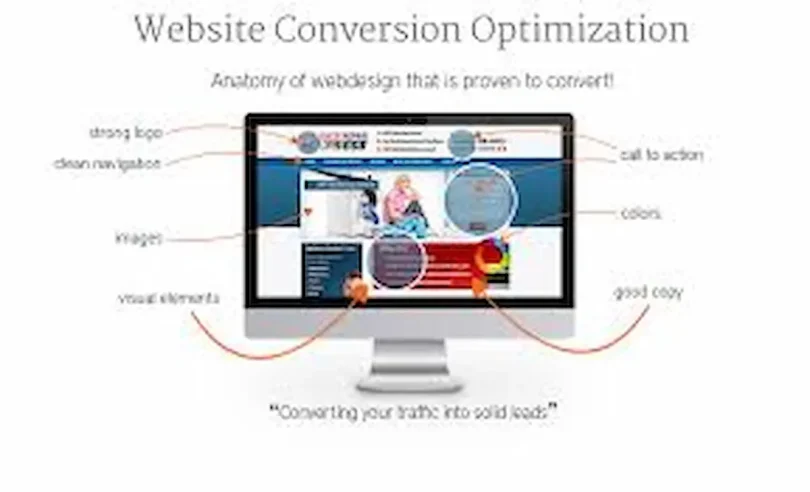
- Use contrasting colors
- Place CTAs multiple times on long pages
- Make buttons big and easy to click
A strong CTA can double or triple conversion rates.
7. Speed Optimization (Very Important)
If your website is slow, nothing else matters.
Most users leave if a site takes more than 3 seconds to load.
To improve speed:
- Compress images
- Remove unnecessary plugins
- Use a fast hosting provider
- Enable caching
Even a 1-second improvement in loading time can increase conversions.
8. Mobile Optimization
More than half of users browse on mobile devices.
So ask yourself:
- Is your text readable on small screens?
- Are buttons easy to tap?
- Does the layout break on mobile?
A poor mobile experience = lost conversions.
9. Building Trust with Visitors
People don’t convert if they don’t trust you.
You can build trust using:
- Customer reviews
- Testimonials
- Case studies
- Money-back guarantees
- Secure payment badges
- Real images instead of stock photos
Trust is one of the strongest conversion factors.
10. Using Visual Hierarchy
Your website should guide the user’s eyes naturally.
Important elements should stand out:
- Headlines larger than body text
- CTAs more visible than normal text
- Key benefits highlighted
Good visual hierarchy = better user experience = higher conversions.
11. A/B Testing for Continuous Improvement
One of the most powerful parts of website conversion optimization is testing.
Instead of guessing, you test:
You can compare:
- Two different headlines
- Two button colors
- Two page layouts
- Different product descriptions
Then you choose the version that performs better.
This helps you improve continuously instead of relying on assumptions.
12. Reducing Distractions
Every extra element on your website can reduce conversions.
Common distractions:
- Too many links
- Popups everywhere
- Cluttered design
- Irrelevant content
A clean, focused page performs much better than a busy one.
13. Using Analytics to Understand Behavior
You can’t improve what you don’t measure.
Tools like analytics help you see:
- Where users drop off
- What pages perform best
- How long users stay
- Where they click
Once you understand behavior, improving conversions becomes much easier.
Common Mistakes That Hurt Conversion Rates
Many websites fail because of simple mistakes:
- No clear message
- Confusing layout
- Weak CTAs
- Slow loading pages
- No trust signals
- Not optimizing for mobile
- Trying to sell too hard too early
Fixing even a few of these can significantly improve results.
Final Thoughts
At the end of the day, website conversion optimization is not about complicated tricks or technical hacks. It’s about understanding real people and making their experience simple, smooth, and trustworthy.
When your website clearly communicates value, loads fast, builds trust, and guides users naturally toward action, conversions increase automatically.
Start small. Improve one section at a time. Test changes. Track results.
Over time, even small improvements can turn your website into a powerful conversion machine that works for you 24/7.
FAQs on Website Conversion Optimization
1. What is website conversion optimization?
Website conversion optimization is the process of improving your website so more visitors complete a desired action—such as making a purchase, signing up for a newsletter, filling out a form, or booking a service.
2. Why is website conversion optimization important?
It is important because it helps you get better results from your existing traffic. Instead of spending more money to bring new visitors, you improve your website so more of your current visitors turn into customers or leads.
3. What is a good conversion rate for a website?
A “good” conversion rate depends on your industry, but generally:
1%–2% = average
2%–5% = good
5%+ = excellent
E-commerce sites, landing pages, and lead generation pages all have different benchmarks.
4. What are the main factors that affect conversion rates?
Several factors impact conversion rates, including:
Website design and usability
Page load speed
Quality of content and messaging
Strength of call-to-action (CTA)
Trust signals like reviews and testimonials
Mobile responsiveness
User experience and navigation
5. How can I improve my website conversion rate quickly?
Some quick improvements include:
Making your CTA buttons clearer and more visible
Improving page loading speed
Adding customer reviews and testimonials
Simplifying your homepage layout
Using strong, benefit-focused headlines
Fixing mobile usability issues
Even small changes can create noticeable improvements.